
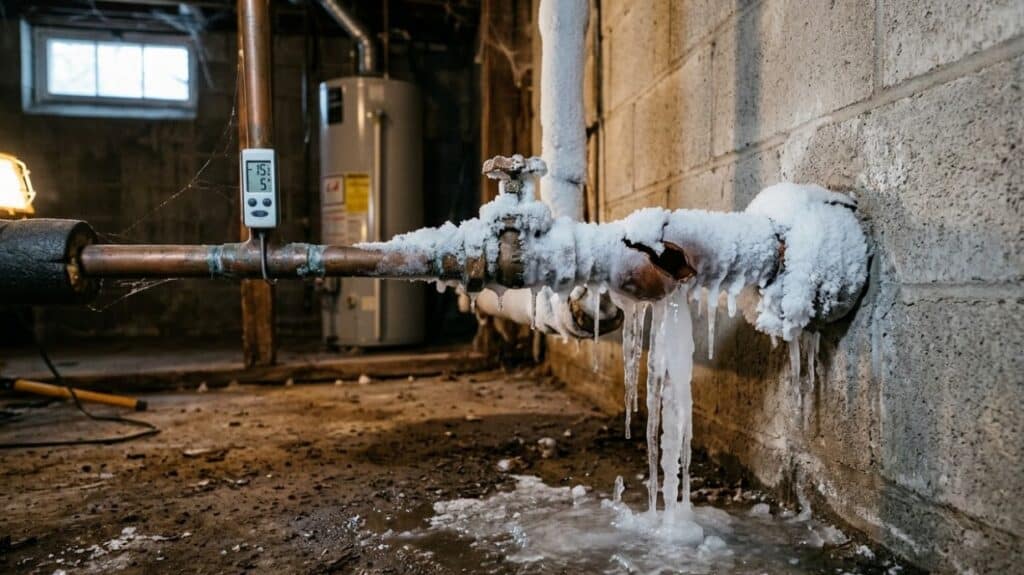
Nobody around here can tell you what a North Carolina winter is going to do. You get a week that feels like fall, and then the next one brings a hard freeze that catches half the neighborhood off guard, and that swing is exactly why we see so many frozen pipes in this part of the state. A lot of our homes simply weren’t built for long stretches of deep cold, so the pipes running through crawl spaces, attics and exterior walls have very little protection when the temperature suddenly drops.
Here’s the good news, though, and we mean it: of all the plumbing problems we get called for, frozen pipes are among the most preventable. A handful of simple steps in the fall, plus a few more during the cold snaps themselves, can save you from a burst pipe, the water damage that comes with it and an expensive repair on top. PF Plumbing helps homeowners across Winston-Salem and the Piedmont Triad protect their plumbing system every winter, and what follows is what we recommend to them.
Key Notes
- Roughly 1 in 60 insured homes files a water damage or freezing claim each year, according to the Insurance Information Institute, and the average claim comes in close to $14,000, which is a lot of money for something a few foam sleeves might have stopped.
- There’s an industry estimate that insurers cite all the time, and it says a crack as small as 1/8 inch in a frozen pipe can release up to 250 gallons of water a day.
- The University of Illinois Building Research Council studied this, and its research found that pipes in unheated areas are most at risk once the outdoor temperature falls to 20°F or below.
Why frozen pipes are such a big problem
People tend to think of frozen pipes as a morning without water, and if that were all there was to it we wouldn’t be writing this. The damage they cause goes way past a temporary loss of water, and it’s a lot easier to prevent once you understand what’s going on inside the pipe.
How frozen pipes burst
Water expands as it freezes, which most of us learned in school and then forgot about. When ice forms inside a pipe, pressure builds up between that ice blockage and the closed faucet at the other end, and it’s that pressure (not the ice itself) that usually splits the pipe open. The crack often goes unnoticed until the ice thaws and water starts pouring into the walls, the ceilings or the crawl space, and that explains why so many frozen pipes turn into leaks a day or two after the coldest night has already passed.
Which pipes are most at risk
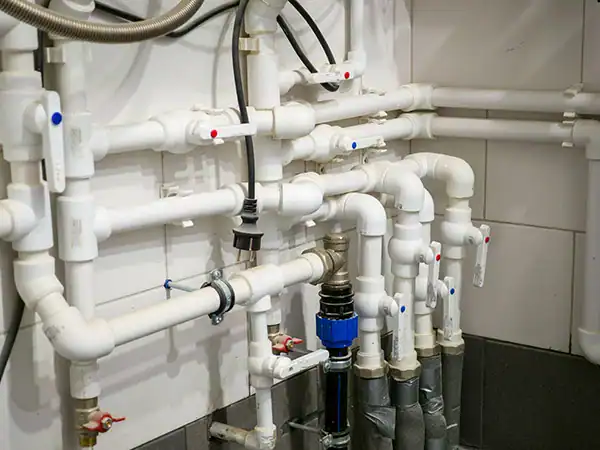
The pipes most likely to freeze are whichever ones are exposed to cold air, and in the homes we work on that usually means:
- Anything running through a crawl space, an attic, a garage or a basement
- Pipes that were routed along the exterior walls of the house
- The outdoor hose bibs, along with any irrigation lines
- The supply pipes under a kitchen or bathroom sink, when that sink backs up to an outside wall
Plenty of homes in the Piedmont Triad have their plumbing in vented crawl spaces, and during a cold snap that makes frozen pipes a very real risk.
When freezing temperatures become dangerous
Yes, water freezes at 32°F, but the pipes inside a home get some protection from the structure around them, so 32 on the thermometer isn’t when we start to worry. The real danger zone begins when outdoor temperatures drop to around 20°F, especially if that happens overnight or for several days in a row, and wind makes all of it worse because it pulls heat away from exposed pipes. So when you see a hard freeze in the forecast, that’s your signal to take action against frozen pipes.
Preventive pipe protection before winter arrives
If you ask us when the best time to prevent frozen pipes is, we’ll say before the first freeze every time. A little preventive pipe work done in the fall goes a surprisingly long way once January rolls around.
Insulate exposed pipes
Foam pipe sleeves are inexpensive, and they’re easy to install on the pipes in your crawl space, attic and garage. For the pipes that are especially vulnerable, a plumber can install heat tape or heat cable, which actually warms the pipe during freezing weather. To be clear about what insulation does, it doesn’t add any heat, but it slows the heat loss down enough to prevent frozen pipes on most cold nights.
Seal drafts and air leaks
We’ve seen a pipe freeze in a house where every room was warm, and the cause was cold air getting in through the gaps around pipes, dryer vents, crawl space vents and foundation cracks. Seal up those gaps with caulk or spray foam. Then close the crawl space vents for the winter, or put vent covers over them, and check that the crawl space door closes tightly.
Disconnect hoses and shut off outdoor faucets
When a garden hose gets left connected, it traps water in the outdoor faucet, and that water can freeze and crack the pipe inside the wall where you can’t see it. So disconnect and drain every hose in the fall. If your outdoor faucets have an interior shutoff valve, close it and then open the outdoor faucet to drain the line. Frost-free hose bibs are an easy upgrade as well, and PF Plumbing can install them to protect against frozen pipes at your outdoor spigots.
How to prevent frozen pipes during a cold snap
Even a home that’s been well prepared needs some extra attention when the temperature plunges. These are the steps we’d take to prevent frozen pipes on the coldest nights of the year.
Let faucets drip
Go around to the faucets on your exterior walls and crack each one open until it’s just dripping, slowly. Moving water is harder to freeze, for one thing, and the drip also bleeds off pressure in the line. Why do we care about pressure? Because if ice starts forming anyway, an open faucet gives that pressure an escape route, and a pipe with somewhere to vent is a lot less likely to burst. If the faucet has separate lines for hot and cold, go ahead and drip both sides.
Open cabinet doors
The pipes under kitchen and bathroom sinks often sit right up against exterior walls, and when you open the cabinet doors the warm air from the room can get to them. If you have kids or pets, move the cleaning products and chemicals out of reach first. It sounds almost too simple to bother with, but this one habit prevents a lot of frozen pipes.
Keep the heat steady day and night
We get why it’s tempting to turn the thermostat down at night and save a little on heating, but a big overnight drop raises the risk of frozen pipes, so during a cold snap we’d keep the temperature steady. Your heating bill goes up by a small amount, and that costs far less than repairing a burst pipe and all the water damage that follows it.
Protecting your home while you’re away
Frozen pipes do the most damage when nobody is home to catch the problem early. Some of the worst jobs we’ve had were houses where the owners were gone for a week and a pipe let go on day two, and by the time anybody opened the front door there was water in every room downstairs.
Don’t let the thermostat go below 55°F
Leaving town in the winter? Leave the heat on too, at 55°F or higher, because at that setting the inside of your walls and cabinets stays warm enough for the pipes. Before you go, we’d also make sure the furnace is actually running well. A furnace that quits in the middle of a cold snap, with nobody home to notice, is behind a lot of the frozen pipes we find in empty homes.
Close the main water valve on longer trips
If you’ll be gone a while, turning off the main water valve is one of the best things you can do to limit damage, because then even if a pipe freezes and cracks there’s no pressure feeding water into the leak. If you’d like extra protection, open a few faucets to drain the lines once the valve is shut off. And if your main valve is stuck or hard to reach, a plumber can repair or replace it before winter gets here.
Have someone check on the house
If you’ve got a neighbor you trust, or a friend nearby, ask them to swing by every day or two for as long as it’s freezing out. It’s a five-minute favor. They check that the heat’s still on, take a look around for anything leaking, and if something has gone wrong they can get help out there fast. Smart water leak detectors, and thermostats that send alerts to your phone, add one more layer of protection against frozen pipes.
What to do if your pipes freeze
You can do everything on this list and still wake up to frozen pipes when an unusually hard freeze rolls through, and that’s nobody’s fault. What you do next, and how fast you do it, is what decides whether it’s an annoying morning or a big repair.
Signs you have frozen pipes
The most common sign, by far, is turning on a faucet and getting only a trickle or no water at all. You may also see frost on exposed pipes, notice odd smells coming from the drains or hear strange noises when you run the water. Try a second faucet before you panic, because if only one fixture is affected the frozen section is likely close to it, whereas if the whole house has no water the freeze may be near the main line.
How to safely thaw a frozen pipe
Plenty of our customers handle this part on their own, and that’s fine, as long as it’s done safely:
- Open the faucet on that line and just leave it open, since the melting ice needs a way out and so does the water behind it.
- Use gentle heat on the pipe (a hair dryer, a heating pad or warm towels all work well), and start at the faucet end before working your way back toward the frozen section.
- A space heater is fine too, as long as you keep it well away from anything flammable.
- Please never put an open flame, a torch or a propane heater on a pipe, because it can start a fire or damage the pipe.
If you can’t reach the frozen section, or you can’t find it at all, that’s the point to stop and call a professional.
When to call a plumber for frozen pipe repair
We’d want you to call a plumber right away in any of these situations:
- One of the pipes has already burst.
- You can see water leaking out as the pipe thaws.
- The frozen section is inside a wall or a ceiling where you can’t get to it.
- The whole house is without water.
Shut off the main water valve first, since that limits the damage while you wait. PF Plumbing’s frozen and burst pipe repair service finds the damaged section, repairs it and then checks the rest of your plumbing system for other weak spots, and there’s 24/7 emergency help for when you need it most.
Frequently asked questions
At what temperature do pipes freeze? Most people guess 32°F, and that is where water freezes, so the guess isn’t wrong. The number we actually watch is lower, though, around 20°F or below outside, because that’s when pipes inside a home get into real trouble, and it’s worse again if the cold hangs on for several nights or the wind is up.
Should I let my faucets drip to prevent frozen pipes? Yes, we’d do it. Pick the faucets on exterior walls and leave a slow drip going, because moving water relieves the pressure in the line and that’s what lowers the chance of a pipe bursting.
What temperature should I keep my house at to prevent frozen pipes? Keep the thermostat at 55°F or higher, and that includes the days when you’re away. During a cold snap, we think holding the heat steady day and night is safer than letting the temperature drop overnight.
How do I know if my pipes are frozen? Most people find out when they open a faucet and little or no water comes out of it. Frost on exposed pipes is another giveaway, and so are unusual noises when you run the water.
Can I thaw frozen pipes myself? On an exposed pipe, sure, with the faucet left open while you warm it up slowly using a hair dryer, a heating pad or a couple of warm towels. What we never want to hear is that somebody took an open flame to it. We’d call a plumber if the pipe is inside a wall, if it has burst or if you can’t find the frozen section.
How can a plumber help prevent frozen pipes? There’s quite a bit we can do ahead of time. A plumber can insulate the vulnerable pipes, install heat cable, swap old outdoor faucets for frost-free hose bibs and repair stuck shutoff valves, so that your plumbing system is ready for winter before it arrives.
Please don’t wait for the first hard freeze to find out where your plumbing is vulnerable. PF Plumbing offers preventive pipe protection, frost-free faucet installation and fast frozen and burst pipe repair for homes in Winston-Salem, Clemmons, Kernersville, High Point, Matthews and throughout the Piedmont Triad, so give us a call today and we’ll get your home ready for winter, starting with a plumbing inspection if you want one. And if a pipe does freeze or burst on you, our 24/7 emergency team is ready to help.