
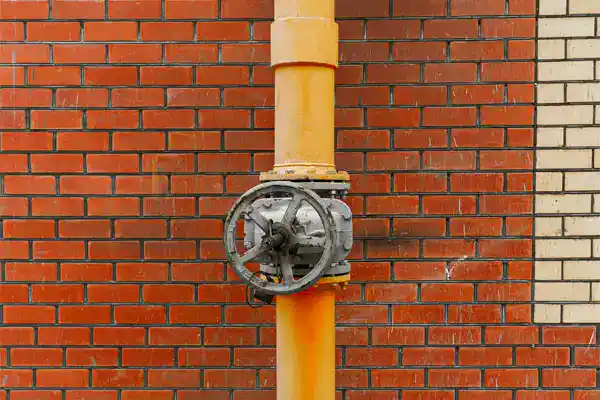
Natural gas is what runs your furnace, your water heater, the stove and the dryer, and most days you don’t give a single thought to the gas line feeding all of them. Then one evening you catch a whiff of rotten eggs by the kitchen, or there’s a faint hiss coming from behind the dryer, and suddenly it’s the only thing you can think about. A leaking gas line is one of the very few plumbing problems that can put your family’s safety at risk, which is why we’ll always tell you it belongs in the hands of a licensed professional.
A lot of people have asked us what actually goes on when a plumber comes out for gas line repair, so we wrote it all down here, one stage at a time. You’ll find the warning signs, what to do before help shows up, how we go about finding the leak, and how the repair gets done safely. Here at PF Plumbing, gas line inspection and repair is work we’re doing every week for homeowners in Winston-Salem and all over the Piedmont Triad.
Key Notes
- We looked up what the NFPA reports on this, and it’s a big number: from 2012 to 2016, local fire departments were getting called out to an estimated 125,000 natural gas or propane leaks a year, all of them in or on home properties.
- Carbon monoxide is the other half of it. Going by CDC estimates, unintentional carbon monoxide poisoning kills at least 420 people in the U.S. each year and sends more than 100,000 to the emergency room, and in many of those cases there was a gas appliance in the house that wasn’t burning or venting properly.
- Nearly half of U.S. homes heat mainly with natural gas, which tells you that for a whole lot of families (maybe yours) staying warm every winter comes down to having a safe gas line.
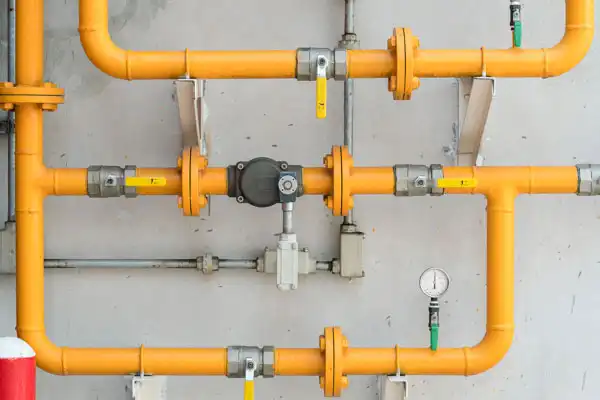
Signs you have a leaking gas line
Gas leaks don’t always announce themselves. We’ve walked up to houses where you could smell it from the front door, and we’ve also chased gas line leaks so small and slow that the homeowner wasn’t sure they were imagining it, so it’s worth knowing the signs well enough to act before a little problem turns into a dangerous one.
A rotten egg odor near gas appliances
On its own, natural gas doesn’t smell like anything at all. The utilities add a chemical called mercaptan to it so that leaks can be detected, and mercaptan is what gives you that rotten egg or sulfur smell. If you pick up that odor near your furnace, water heater, stove or dryer, or anywhere along the gas line for that matter, treat it as a leak until a professional proves otherwise. That goes for the faint smell that comes and goes, too, because in our experience that’s exactly how small leaks at fittings tend to start out.
Hissing sounds, bubbles and dead grass
When you hear hissing or whistling near an appliance or a stretch of exposed gas piping, it can mean gas is escaping under pressure. Outside the house it looks different, since a leak in an underground gas line can kill the grass and plants in a strip right above the pipe, or make bubbles come up in puddles and wet soil. So if there’s a patch of dead vegetation out there that doesn’t match the rest of your yard, we’d have that gas line checked.
Rising gas bills and physical symptoms
Sometimes the first clue is the gas bill jumping for no good reason, with no colder weather and no new appliances to explain it, and that can mean gas is getting out somewhere in the system. The people living in the home may also notice headaches, dizziness, nausea or fatigue that get better once they’ve left the house. Here’s the tricky part, though: carbon monoxide from a gas appliance that isn’t burning or venting correctly can cause those very same symptoms, and that’s another reason we like to have a plumber inspect both the gas line and the appliances it feeds.
/
What to do the moment you suspect a leak
The second you suspect a leak, you’ve only got one job, which is getting everybody to safety and letting the professionals take it from there. Please don’t go hunting for the leak or try to inspect the gas line yourself, no matter how handy you are.
Get everyone out of the house
Walk out of the home right away and take everyone with you, pets included. If it’s easy to do on your way out, leave the door open behind you so the gas has somewhere to go, but don’t stop to gather up belongings and don’t go around the house opening windows.
Avoid anything that could create a spark
It takes a very small spark to ignite natural gas that’s escaping from a gas line, so for as long as you’re still inside:
- Leave every light switch exactly how it is, on or off, and don’t unplug any appliances.
- No lighters and no matches, not even for a second.
- If your garage is attached to the house, the car stays off.
- Keep the phone in your pocket until you’ve put a safe distance between you and the house.
Call for help from a safe distance
Once you’re outside and well away from the home, call 911 or your gas utility’s emergency line, which in Winston-Salem and much of the Triad means Piedmont Natural Gas. The utility is who shuts off the gas supply and makes the area safe. What catches people off guard is where the utility’s part ends, because they generally handle the lines up to the meter and the piping past the meter is the homeowner’s responsibility. In plain terms, you’re going to need a licensed plumber to find and repair the leaking gas line on your own property, and PF Plumbing offers 24/7 emergency service for exactly this situation.
How a licensed plumber inspects a gas line
So the area is safe and the plumber has pulled up in the driveway. What happens first? Before anything gets repaired we want to know for sure that the gas line is leaking, and then exactly where on the line that leak is. We take our time on the inspection because it means the repair goes after the real problem and nobody is working off guesswork.
Pressure testing the gas piping
If you ask us, a pressure test is the most reliable way there is to confirm a leak. The plumber isolates whichever section of gas line is being tested, hooks up a gauge and pressurizes the system, and then we watch it. When the pressure drops during the test period, gas is escaping somewhere, and what’s nice about this test is that it tells you whether the system is tight even when the leak is too small for anyone to smell.
Pinpointing the leak with detectors and leak solution
After a leak is confirmed, the plumber has to trace it, and we’ve got two tools for that. One is an electronic combustible gas detector, which can sense tiny amounts of gas around fittings, valves and joints, and the other is a leak detection solution that gets brushed onto the connections and bubbles up wherever gas is escaping. Between the two of them we can pinpoint the exact fitting or section of gas line that needs attention.
Checking appliance connections and shutoff valves
A lot of the leaks we find are at the very end of the gas line, right where it connects to an appliance. The flexible connectors behind stoves and dryers get bent every time somebody slides the appliance out to clean or paint, and the older connectors can crack. While we’re back there the plumber also checks each appliance shutoff valve and looks for corrosion, loose fittings and missing sediment traps, all of which can affect safe operation.
How a plumber repairs a leaking gas line
Which repair is the right one depends entirely on what failed. A good plumber will explain what they found and what it’s going to take to fix it before any work starts (that’s how we do it), so you’re never surprised by the bill at the end.
Tightening or replacing failed fittings
Small leaks in a gas line often come from the threaded fittings, either because the sealant has dried out or because a joint has loosened up over time. To fix one, the plumber shuts off the gas, takes the fitting apart, cleans the threads, applies gas-rated sealant and puts it back together, and if the fitting turns out to be cracked or corroded it simply gets replaced with a new one.
Replacing damaged sections of gas piping
When we find a section of gas line that’s corroded, damaged or was improperly installed to begin with, that section gets replaced. What goes in its place depends on what your system uses and what local code allows, so the new section might be black iron pipe, flexible CSST, or polyethylene if it’s an underground run. Swapping old appliance connectors for new ones that are properly sized is also a pretty common part of gas line repair.
Final pressure testing and safe restart
Once the repair is done, the plumber pressure tests the gas line a second time to confirm the system holds, and depending on the scope of the work a permit and an inspection may be required as well. After everything checks out, the plumber restores the gas supply, purges the air from the line and relights the pilot lights. We don’t consider the job finished until every appliance is working safely, and that happens before the plumber leaves your house.
Why gas line maintenance protects your home
Most gas leaks don’t happen overnight. They start out as a loose fitting, a pipe that’s beginning to corrode or a worn connector, which is why regular gas line maintenance has a good chance of catching them early.
What happens during a gas line maintenance visit
On a maintenance visit, a plumber inspects the visible gas piping, checks every appliance connection, tests the shutoff valves and looks for corrosion or physical damage. Plenty of our customers pair it with a water heater or furnace check so that the whole system gets reviewed in one trip. You come away with a clear picture of your gas line and, honestly, some peace of mind heading into heating season.
Why gas line work requires a licensed professional
We’ll say it plainly, gas line work isn’t a DIY project. In North Carolina, gas piping must be installed and repaired by a properly licensed contractor, and many jobs require a permit on top of that. A mistake can lead to leaks, fires or carbon monoxide problems, and unpermitted work can also cause trouble with your insurance or when you go to sell your home. So hiring a licensed plumber for gas line repair is really about protecting your family and your investment at the same time.
When to schedule gas line maintenance
We think early fall is the ideal time, before your furnace, gas fireplace and water heater start working harder in the cold. It’s also worth scheduling a check if any of these sound like you:
- The house you just bought is an older one.
- A gas appliance got added, or an existing one got moved to a new spot (we handle that gas line installation work as well).
- There was a renovation and it happened anywhere near gas piping.
- One or more of the warning signs we described above has shown up at your place.
A quick gas line inspection costs far less than an emergency repair, and it’s a lot less stressful as well.
Frequently asked questions leaking gas line
What does a gas leak smell like? Rotten eggs, or sulfur if you’d rather call it that. The gas has no smell of its own, so utilities add a chemical called mercaptan to natural gas, and that’s what you’re picking up. Should you notice it near your appliances or anywhere along a gas line, get out of the home first and call for help once you’re outside.
Can a plumber repair a gas line? Yes, we do it all the time. A licensed plumber can inspect, pressure test and repair the gas piping inside your home and anywhere on your property past the meter, while the lines up to the meter belong to your gas utility and they’re the ones who handle those.
How does a plumber find a gas line leak? We start with a pressure test, since that’s what confirms there’s a leak in the first place. From there it’s electronic gas detectors and leak detection solution, and those two are how the plumber pinpoints the exact fitting or section of pipe.
Is it safe to stay home with a small gas leak? No, and we wouldn’t risk it even for a leak that seems tiny, because even a small leak can build up and ignite. What we’d want you to do is get out right away, keep clear of anything that might create a spark on your way, and then, from outside, call 911 or your gas utility.
How often should I schedule gas line maintenance? Once a year is the rule we give people, and early fall is the best slot for it since it’s ahead of heating season. Beyond that, get a check scheduled any time a gas appliance is added or moved, or any time a warning sign turns up.
How long does a gas line repair take? When it’s a simple fitting or connector repair, we’re often finished in a few hours, and that includes the final pressure test. It takes more time when longer sections of piping or underground lines have to be replaced, and with permitted work there may be an inspection to pass before the gas gets turned back on.
So whether you smell gas, you’ve spotted one of the warning signs or it’s just time for gas line maintenance, PF Plumbing is the call to make. We’ve got licensed plumbers handling gas line inspection, leak detection and gas line repair for homes in Winston-Salem, Clemmons, Kernersville, High Point and the rest of the Piedmont Triad, and you can call today to schedule a visit. And for the gas line problem that can’t wait until morning, there’s our 24/7 emergency team, ready to respond.