
Winston-Salem and the surrounding Piedmont Triad area are renowned for their breathtaking, mature tree canopies. From the towering historic oaks lining the streets of Buena Vista to the sprawling maples shading homes in Clemmons and High Point, these magnificent trees add immense aesthetic value, provide vital summer shade, and define the character of our local neighborhoods. However, beneath the beautiful green lawns and manicured landscapes, a slow, invisible, and highly destructive battle is constantly raging between nature and your home’s infrastructure. The biggest underground enemy your plumbing system faces is tree roots.
When tree roots infiltrate your sewer line, they do not just cause a temporary inconvenience; they trigger a cascading series of plumbing failures that can result in catastrophic raw sewage backups, severe property damage, and massive excavation and repair bills. Homeowners are often completely unaware of the subterranean invasion until a total pipe failure forces sewage back up into their bathtubs and floor drains.
In this comprehensive guide, we will explore the fascinating and destructive biology of why vegetation attacks your plumbing, the early warning signs that your pipes are under siege, and the professional solutions required to permanently stop the invasion and restore your home’s sanitation system.
Why Do Plants Attack Plumbing? The Biology of the Invasion
To understand the threat, you have to look at how vegetation survives, especially during the hot, dry stretches of a North Carolina summer. Trees are incredibly efficient survival machines. Their underground networks are constantly expanding, probing the soil for essential resources: water, oxygen, and nutrients.
Your home’s main sewer line is essentially an underground river flowing with all three of these vital resources, which makes them a prime target for thirsty tree roots. Warm water escaping from showers, dishwashers, and washing machines flows constantly through these pipes. As the organic waste breaks down inside the pipe, it releases nutrient-rich vapors and oxygen.
Even the smallest, microscopic hairline crack or a slightly loose joint in an underground pipe allows this warm moisture vapor to escape into the surrounding soil. This vapor acts as a beacon for aggressive tree roots. Through a biological process known as hydrotropism, the root systems sense the moisture gradient in the soil and begin growing directly toward the source of the leak.
Once the tip of the tree roots locates this moisture, it forces its way through the tiny crack or loose joint in the pipe. The initial entry point might be no thicker than a single strand of human hair. However, once inside the dark, nutrient-rich environment of the pipe, the tree roots experience rapid, explosive growth. They branch out, growing thicker and longer, transforming from tiny, hair-like tendrils into thick, woody masses that completely choke the interior of the plumbing.
The Warning Signs of an Underground Invasion
Because this destruction happens buried several feet beneath your front lawn, you cannot see the damage occurring. By the time the issue becomes obvious, the blockage is usually severe. However, if you pay close attention to the subtle behavioral changes in your home’s plumbing, you can catch the problem before the pipe suffers a complete structural collapse.
1. Slow Draining Across Multiple Fixtures
If a single bathroom sink is draining slowly, the problem is likely an isolated clump of hair in the P-trap. However, if your kitchen sink, guest bathroom toilet, and master shower are all struggling to drain simultaneously, the issue lies deep within the main sewer line. A massive tangle of tree roots acts like a net, catching toilet paper, grease, and solid waste as it attempts to leave your home, creating a severe bottleneck.
2. Gurgling Sounds From Toilets and Drains
When a solid blockage caused entirely by tree roots restricts the flow of water, it creates negative air pressure inside the pipe. As water struggles to push past the obstruction, trapped air is violently forced backward up the pipe, resulting in a distinct, bubbling, gurgling sound emanating from your toilet bowls or shower drains.
3. Foul Odors Inside and Outside the Home
Sewer lines are designed to carry waste and noxious gases completely away from your property. If you notice a foul odor in your yard, tree roots might have already cracked the main line, allowing raw sewage to seep directly into the soil. Similarly, if you smell hydrogen sulfide (a distinct rotten egg smell) coming from your indoor drains, the roots have created a blockage severe enough to push sewer gases back up into your living space.
4. Unusually Lush Patches of Grass
During a dry spell in late August, most lawns in Forsyth County begin to turn slightly brown and dormant. A sudden patch of vibrant green grass over your sewer line often means tree roots are feeding on leaking sewage. The waste acts as a highly effective, continuous liquid fertilizer for the grass above the broken pipe.

5. Sinkholes and Foundational Shifts
In the most extreme cases, sinkholes and foundational shifts can also occur when tree roots cause a total pipe collapse. As the broken pipe continuously leaks massive amounts of water into the surrounding soil, the dirt washes away, creating hidden underground voids that eventually collapse the surface of the lawn or compromise your driveway.
The Mechanics of the Damage: Why Older Pipes Fail
The age of your home plays a massive role in your vulnerability to this specific type of plumbing emergency. Many historic and mid-century homes throughout the Piedmont Triad were constructed using plumbing materials that simply cannot withstand the test of time and nature.
Homes built before the 1980s frequently utilize clay tile or cast-iron sewer pipes. While durable for their time, these materials are highly susceptible to tree roots. Clay pipes are installed in short sections, meaning there are numerous joints. Over decades, the earth shifts, the mortar sealing these joints degrades, and the joints separate, providing easy access points. Cast iron pipes, on the other hand, slowly rust and corrode from the inside out, creating weak spots and cracks.
The immense physical pressure exerted by expanding tree roots can shatter older pipes entirely. As the woody root mass grows thicker inside the pipe, it acts like a wedge. The pressure outward can literally snap a clay or cast-iron pipe in half, necessitating thousands of dollars in deep excavation to repair. Modern PVC (polyvinyl chloride) pipes are glued together with chemical solvents, creating a seamless, watertight bond that is much harder for vegetation to penetrate, but even PVC is not completely immune if ground settling causes the pipe to crack.
Professional Solutions: How Plumbers Defeat the Invasion
If you are experiencing the warning signs of an underground blockage, do not waste your money or risk your safety by pouring harsh chemical drain cleaners down your toilet. Chemical drain cleaners are virtually useless against established tree roots and rely on highly corrosive acids that can easily melt right through older, weakened metal pipes, turning a solvable blockage into a plumbing nightmare.
Solving this problem requires professional diagnostic equipment and heavy-duty, specialized plumbing machinery.
Step 1: The Camera Inspection
The first step in diagnosing any severe mainline issue is performing a professional sewer line camera inspection. A licensed plumber will feed a high-definition, waterproof camera attached to a flexible fiber-optic cable directly down your home’s cleanout pipe. This allows the technician to visually inspect the interior of the pipe on a digital monitor to identify the exact location and severity of the tree roots, as well as assess the structural integrity of the pipe walls.
Step 2: Clearing the Obstruction
If the pipe is still structurally intact, the roots must be physically removed. Plumbers typically use two methods. The first is an industrial plumbing snake equipped with a heavy-duty, rotating cutting blade that chops the roots into small pieces. However, for a truly clean pipe, hydro-jetting is the preferred solution.
Hydro-jetting utilizes highly pressurized water (often exceeding 4,000 PSI) blasted through a specialized, multi-directional nozzle. This extreme water pressure is highly effective at slicing through thick tree roots, scouring the pipe walls clean of accumulated grease and scale, and washing all the debris safely down into the municipal sewer main. For homes in the Triad, professional drain clearing via hydro-jetting restores the pipe to its maximum original diameter.
Step 3: Repairing the Breach
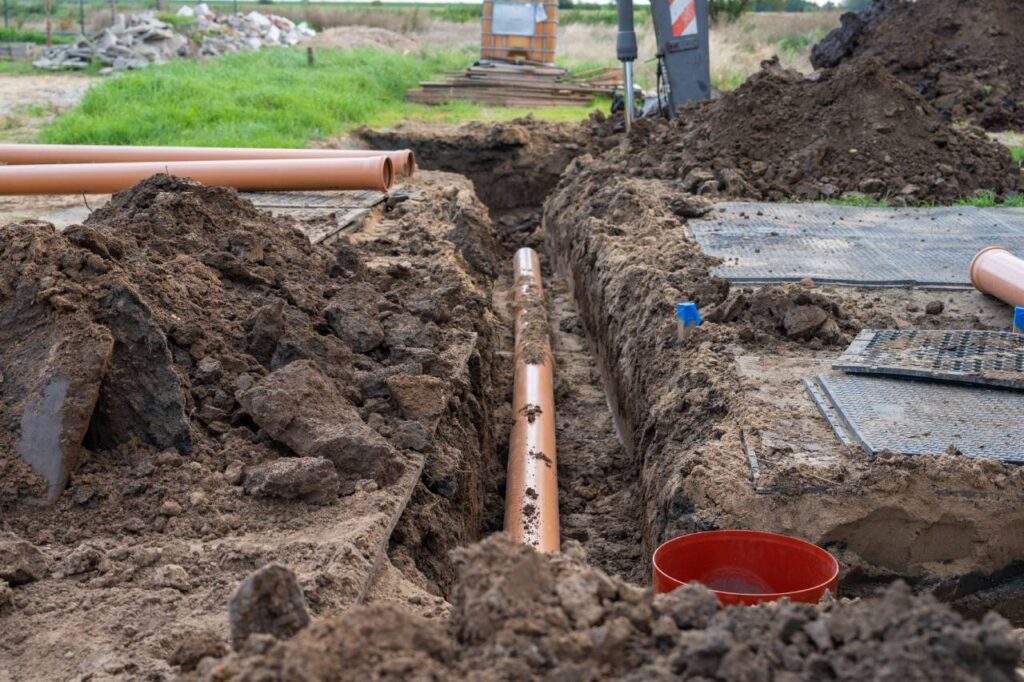
Once we clear the tree roots, we must repair the breach, or the roots will simply grow right back through the crack within a few months. Historically, repairing a broken sewer line meant renting a backhoe and tearing up your entire front lawn, destroying your landscaping, and tearing out your driveway to physically dig up and replace the pipe.
Today, modern plumbing offers trenchless sewer repair. This advanced technology allows plumbers to rehabilitate the pipe from the inside out. Using a method called Cured-In-Place Pipe (CIPP) lining, a technician inserts a flexible liner saturated with a specialized epoxy resin into the damaged pipe. Once inflated and cured, it creates a brand new, seamless, structural pipe within the old pipe. This “pipe within a pipe” is completely watertight, sealing off all cracks and joints, rendering it permanently impervious to future root invasions.
Prevention and Long-Term Landscaping Care
While professional repair is highly effective, the smartest strategy is always prevention. How you manage the landscaping above your plumbing infrastructure dictates the lifespan of your pipes.
Before planting any new trees or large shrubs, always consult your property’s plot plan or contact local utilities to identify exactly where your underground water and sewer lines are buried. The Environmental Protection Agency provides vital resources on protecting your underground residential water infrastructure from environmental damage.
When landscaping, avoid planting species known for having highly aggressive, invasive tree roots. Fast-growing trees like weeping willows, silver maples, sycamores, and certain varieties of oak possess massive, shallow root systems that aggressively hunt for water. Instead, opt for smaller, slow-growing ornamental trees with contained root systems, and plant them a safe distance away from your utility lines. You can check with organizations like the North Carolina State Extension to find native, plumbing-safe plant species perfectly suited for the Piedmont Triad climate.
The best defense against tree roots is proactive maintenance. Enrolling in a comprehensive plumbing maintenance membership ensures that a licensed professional is keeping a close eye on your system year-round. Catching a tiny, hair-like root intrusion during an annual plumbing inspection allows you to clear the pipe quickly and affordably, long before the roots have a chance to grow thick enough to shatter the pipe and cause thousands of dollars in property damage.
The majestic trees of Winston-Salem are a vital part of what makes our community so beautiful, but they should never come at the expense of your home’s sanitation and structural safety. Ignoring slow drains, gurgling toilets, and strange yard odors will only lead to catastrophic plumbing failures. If you suspect tree roots are wreaking havoc on your property, do not wait for the sewer line to completely collapse. Contact the experienced, local professionals at PF Plumbing today for a comprehensive camera inspection, and let our team protect your home from the ground down.